Showing posts with label first year design. Show all posts
Friday, 3 April 2015
Friday, 2 January 2015
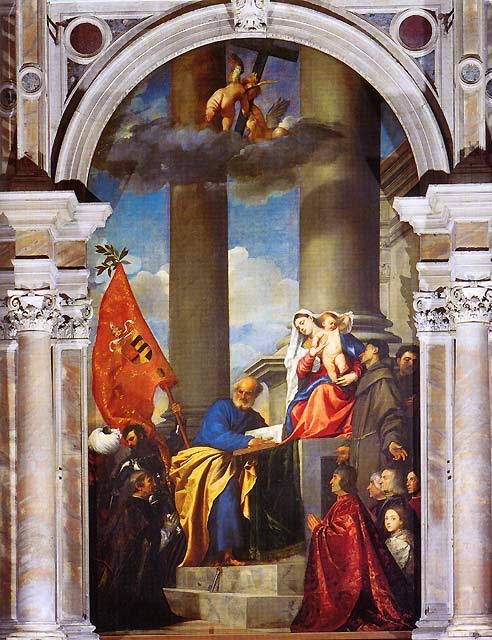
Linear perspective and the Renaissance
Masaccio (1401-1428)


Initial discovery is attributed to architect Filippo Brunelleschi (1377-1446)
Leon Battista Alberti ( 1404 - 1472)
published a book " On Painting", 1435, outlining the rules of linear perspective, introducing the grid system and becoming renowned around Europe as essential reading for painters.
Masaccio (1401-1428)
First artist to demonstrate full command of the rules of perspective in his work.
He became the father of the new style of Florentine Realism.
Alhazen's book of optics, available in the italian translation " Deli Aspecti" heavily inspires the work of Lorenzo Ghiberti.

By the late 15th cent artists such as Leonardo, Michelangelo, Raphael, Botticelli, Donatello, Titian, Hugo Van Der Goes and Jan Van Eyck had taken full control over the laws of perspective.

Miachael Thonet
1796-1871
Experimented heavily with the bentwood process and pioneered the mass production of furniture.
In 1819 he established his own furniture workshop in his home town of Boppard am Rhein, and around 1830 he started to experiment with laminated wood in the Biedermeier style.
He showcased his work at the Koblenz 1841 exhibition, the same year he patented his wood bending process in England, France and Belgium.
The following year he exhibited at Mainz, attracted the attention of the prince/court of Metternich and subsequently received an invitation to travel to Vienna. Setting up a company with Karl Leistler and going on to gain commissions from prince Liechtenstien and the british architect P.H. Desvignes.
Choosing to remain in Vienna, having gained a 5 year contract decorating a palace for Liechstenstien in the neo- rococo style with P.H. Devignes. Thonet set up a new workshop with his sons in Gumpendorf, (1849), focusing heavily upon developing techniques for mass production.
He went on to exhibit his furniture at the 1851 Great exhibition, Crystal Palace, London. Receiving the bronze award for innovation and setting a precedent in industrial aesthetics that was later further developed during the art deco period by modernist designers.
Wednesday, 26 November 2014
Thursday, 13 November 2014
Ron Arad
Born in Israel 1951
Architect & Designer
Studied at the Belzalel Academy of Fine Art, Jerusalem.(1971-1973)Then at the Architectural Association, London, under the mentorship of Peter Cook. A key founder of the Archigram movement.
Worked briefly as an architect.
Established Ron Arad Associates, 1989.
Established Ron Arad Architects, 2008, to run in conjuncture with the above.
Professor of Design Product at the Royal College of Art in London, 1997-2009
Royal Academician, Royal Academy of Arts, 2013.
Considered a sculptor of furniture and spaces, Arad has pushed the boundaries of acceptability with his choices of materials and decorative components.
He has cultivated a high tech/post punk/post apocalyptic aesthetic, utilising deliberately coarse industrial materials, coupled with found objects and scrap.
However, he is also highly selective of his materials and the ways in which they are manipulated.
His initial aesthetic is most prominent in his interior design during the 1980's, such as his work for Bazaar on London's South Molton Street, 1984, in which cast concrete features where accompanied with an air of dislocation, destruction and decay.
Arad's furniture takes a more ironic and playful vain that is undeniably present in the form of his "Big easy" chair.
The big easy series was intended to demonstrate that comfort could be obtained using industrial materials, that would not normally be associated with soft furnishings.
Later Arad moved toward mass producing some of his earlier designs, Such as his "Book worm" Bookcase, that was first produced in limited numbers and constructed from steel, and later re released made out of translucent plastic for more general consumption and manufactured by Kartell.
Monday, 10 November 2014
Sokushinbutsu

Images courtesy of various sources
Japanese Monks that successfully underwent the process of self mummification.
A full explanation of the concept and procedures used can be found here.
Sunday, 19 October 2014
The Polygon Nuclear Test Sea 1 (After the event), Kazakhstan 2011
Kurchatov IV (Telephone Exchange), Kazakhstan, 2011
The Aral Sea (Officers Housing), Kazakhstan 2011
The Aral Sea III (Fishing Trawler), Kazakhstan 2011
The Polygon Nuclear Test Site I (After the event), Kazakhstan 2011
NUCLEAR TEST CITIES ABANDONED BY THE SOVIET UNION
Subscribe to:
Posts (Atom)


.jpeg)

.jpeg)
.jpeg)