Showing posts with label perspective. Show all posts

Friday, 2 January 2015

Linear perspective and the Renaissance

Initial discovery is attributed to architect Filippo Brunelleschi (1377-1446) 


Leon Battista Alberti ( 1404 - 1472)

 published a book " On Painting", 1435, outlining the rules of linear perspective, introducing the grid system and becoming renowned around Europe as essential reading for painters. 


Masaccio (1401-1428)
First artist to demonstrate full command of the rules of perspective in his work.
He became the father of the new style of Florentine Realism.


Alhazen's book of optics, available in the italian translation " Deli Aspecti" heavily inspires the work of Lorenzo Ghiberti


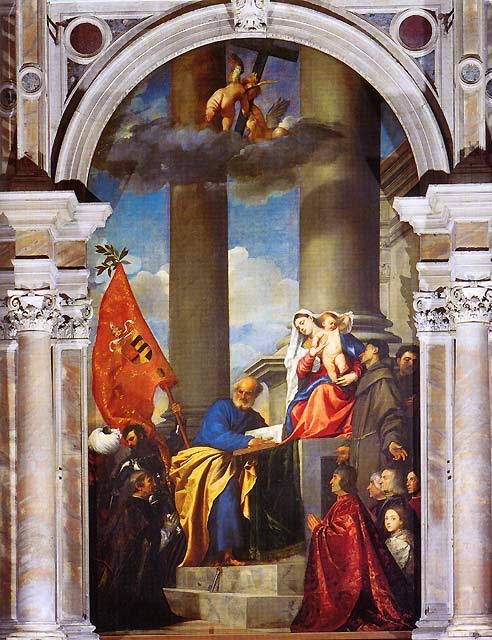
By the late 15th cent artists such as Leonardo, Michelangelo, Raphael, Botticelli, Donatello, Titian, Hugo Van Der Goes and Jan Van Eyck had taken full control over the laws of perspective.


Monday, 17 November 2014

Advice from visiting designer D Block


" What effects business and society 

effects us as well"


Monday, 10 November 2014

Sokushinbutsu


 Images courtesy of various sources


Japanese Monks that successfully underwent the process of self mummification. 


A full explanation of the concept and procedures used can be found here


Monday, 22 September 2014


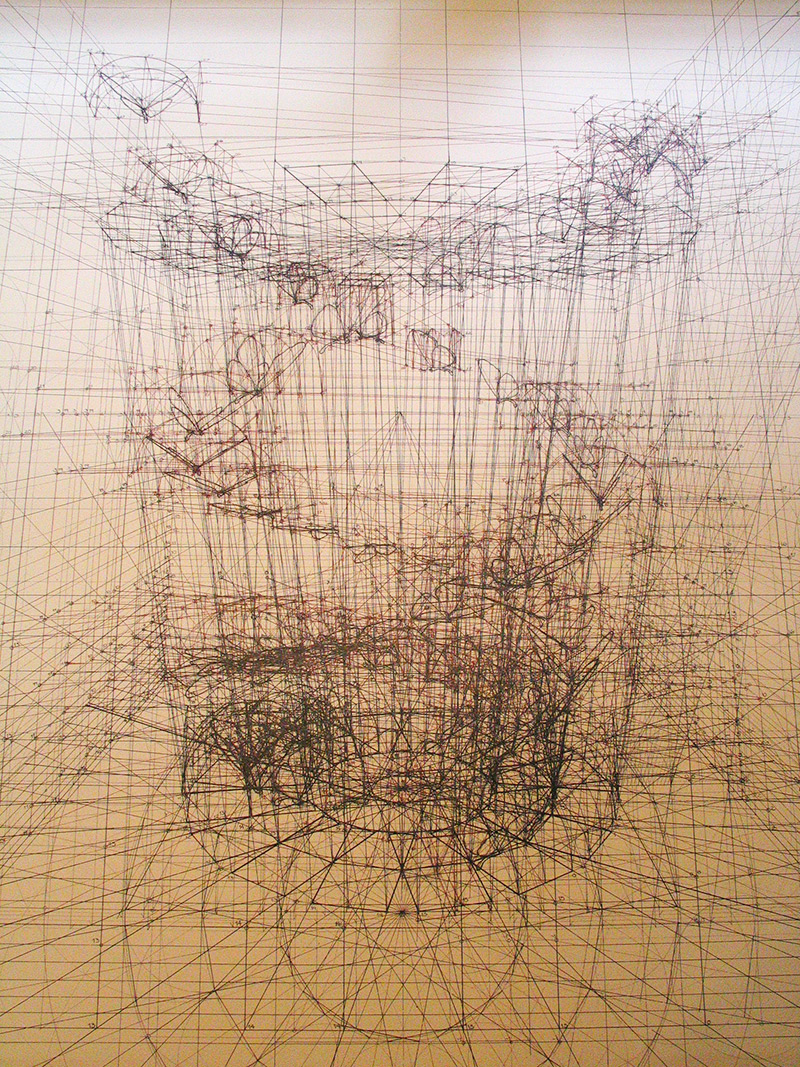
"CALCULATION" DRAWINGS BY RAFAEL ARAUJO

Source

Rafel Araujo is a Venezuelan artist/illustrator who's stylistic influences include both Da Vinci and M.C. Escher. 


Working on an old drafting table, Araujo began drawing his own perspective illustrations, eyeballing the trigonometry to plot dot sequences that would allow him to create curved shapes like double helixes and cones. If you look closely at Araujo’s drawings, you’ll notice each of the main shapes sits within a line-drawn square or rectangle—he began adding this to his works after realizing these scaffolding boxes created a more reliable way to correctly position the dots. “There is naturally a learning curve,” he says. “And as problems are solved, you become more adept and, again, daring.”


As Araujo became more confident in his skills, he began adding ink-drawn butterflies, insects and shells to the canvas and painting them with acrylic in order to add visual complexity to his work. Each illustration takes him upwards of 100 hours, and that’s if he doesn’t mess up. “Painting is very similar to cooking,” he says. “You’ve got to be always careful!”